Song of the Day(s) : Don’t Let the Good Life Pass You By
“Did you ever hold a hand to stop its tremblin’, Did you ever watch the sun desert the sky? Did you ever hold a woman while she’s sleepin’…Just don’t let the good life pass you by”
Thought a lot about this song on this journey. Feels like I could rewrite it: Did you ever sleep under the stars? Ride a horse all day? Swim in ice cold rivers? Watch the sun sink below the mountains? Sure, it doesn’t rhyme, but I really do try my best not to let the good life pass me by. Plus, the jangly guitar on this one just sounds like a cowboy soundtrack. Don’t you think?
“You know, I really haven’t prepared for this at all. I have no idea what to expect.” These are words I rarely ever say about anything, but I found myself telling this to my mother as I struggled to re-pack my bag ahead of my next adventure. In fact, this next phase was the impetus for this whole trip. I’d been sitting in my living room in Singapore, where almost everything good is expensive, lamenting to my friend Alice. “I just want to eat a nice steak. And drink a glass of good red wine. And…maybe….ride a horse? You know what — I think I’m going to go to Argentina.” She gave me a confused look but knew by that point not to question it, and a few weeks later the trip was planned and booked.
So yes, at some point in November 2024 while sitting in a motel in Goa, India, I’d booked my spot on a 6 day crossing of the Andes on horseback. All I knew was that it picked up in Mendoza, went to the Chilean border and back, and required no prior horseback riding experience. The website I had booked through had some recommendations on what to pack — basically the same layers as I’d brought for Patagonia — and warned that there would be shared tents and no showers. Thinking that after almost a month in Patagonia I had basically gone full dirtbag, I didn’t worry too much about this, and was mostly worried about how to keep myself from burning in the high-altitude sun amidst a heatwave. Well, that and the fact that I had just been added to the WhatsApp group for the trip and discovered I was the only non-Spanish speaker: we’d be 15 Argentinians, 2 Mexicans, and me. I hoped at least a few would speak English and figured this would be a good opportunity to work on my currently non-existent Spanish. It was in this spirit that I boarded the already-full charter bus and struck up a very simplistic conversation with a woman named Ingrid from Cordoba. She was in her late 60s, if I had to guess, and traveling alone. I also met Belu, who was traveling with her mom as a post-graduation trip and who very graciously translated the driver’s instructions for me. I sat down next to Santi, a heart surgeon traveling with his father-in-law, Ariel, and settled in for the two hour ride from Mendoza to Tupungato, flying by vineyards and farms and passing the occasional gaucho riding through town.
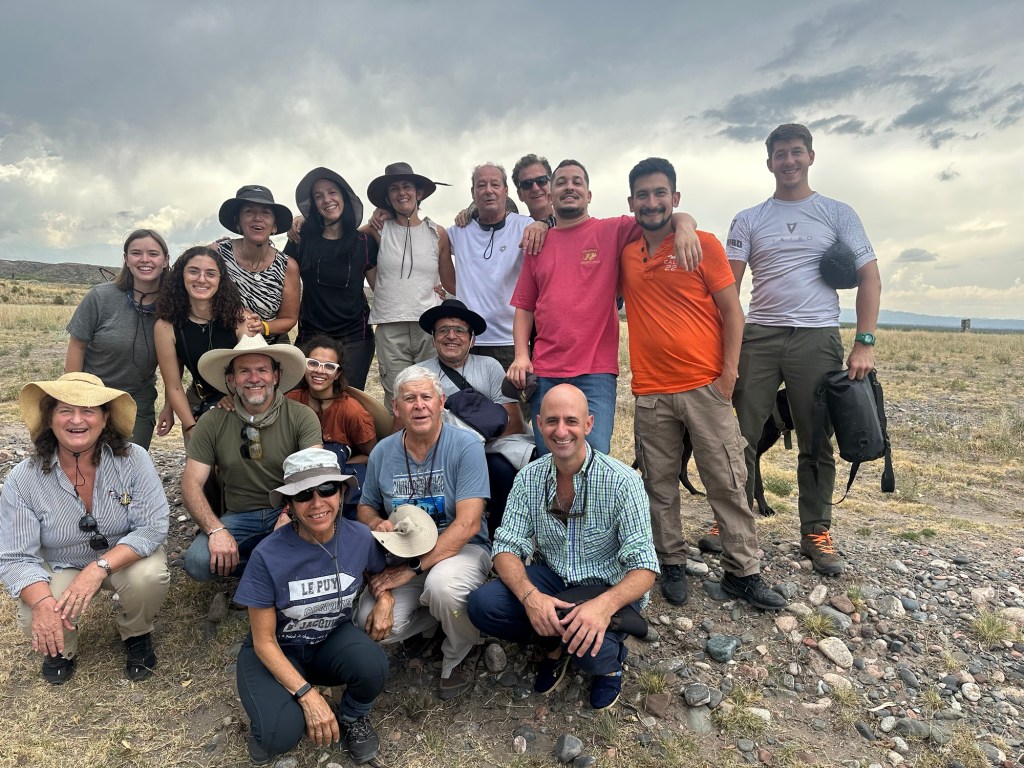
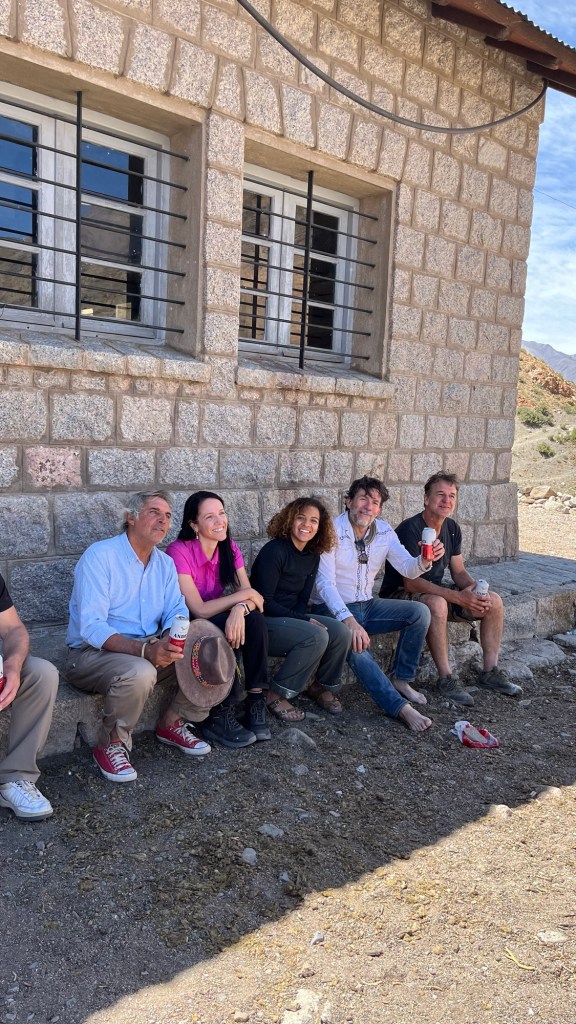
The trip started with a wine tasting and some of the best empanadas I’ve had at the house of Diego, our trip leader. Diego sported silver hair, a wealthy man’s tan, a jaunty red scarf and feathered cowboy hat. He owned the horses and the company and, I later learned, much of the land where we would be riding. After a few glasses of Malbec I was starting to feel like I spoke Spanish and managed to meet more of the crew: Sonia and Mariella, two forty-something friends from Cordoba; Juan and Regina from Mexico; Pedro and Facundo from Sante Fe; Flavio who proudly informed me he spoke Italian as he had family in Piemonte; Diego who brought his own tent as he refused to sleep in a shared tent (fair enough) and a few of the others. After lunch we changed into our riding clothes, dropped off excess luggage, and clambered back into the bus for another hourlong ride up into the mountains on gravel roads. We finally arrived to the Gendarmerie, where we gave our details to the guard (so they could make sure we eventually made it back) and were assigned our horses.
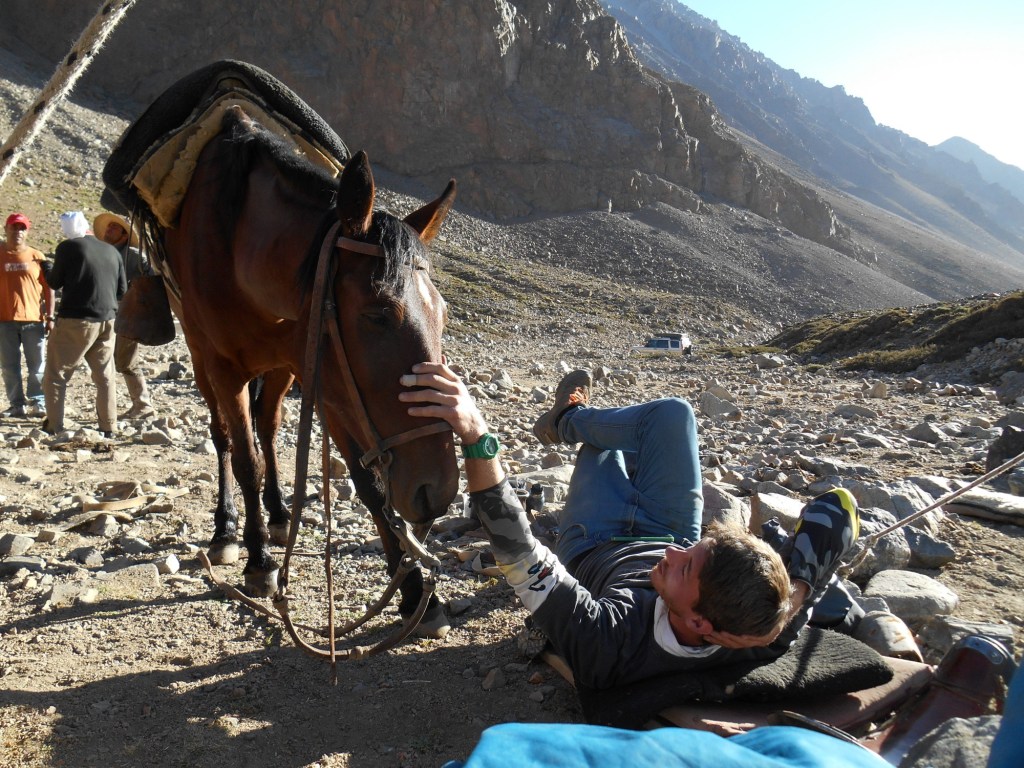
I hadn’t ridden a horse in years. The last time was 5 years ago while digital-nomading in Greece, and I was so stiff after a one-hour trail ride I could barely walk. As a kid I had ridden a bit — famously talked my way into an intermediate class at a summer camp as an absolute beginner based on knowledge I’d picked up from books — but frankly, I wasn’t sure what to expect. I was assigned Nuve, named for his white coat. I managed to get myself up and in the saddle on my own, fumbled a bit with the reins (unlike riding English, Western style means you have two unconnected reins, longer stirrups, and a theoretically more comfortable saddle), and gave Nuve a kick to get moving. Nothing happened. “Vamos, Nuve!” I pleaded, with more kicks and some tongue clicks. Nuve was uninterested. Finally, one of the gauchos saw me struggling, gave him a good smack on the rear, and Nuve shifted into first gear. This was an omen of things to come, I would later learn.
The first day of riding was only a few hours up to camp, where half the gauchos were going by pickup truck to set up ahead of us. We followed a gravel road as it wound its way up through the reddish-orange mountains, crossing a few streams but mostly taking it easy as the sun set ahead of us. I had used an extra bootlace and some zip ties to jerry-rig my sun hat into a cowboy hat, through the sun was so low I didn’t need it yet. I tried to urge Nuve into a trot (or at least a faster walk) but he seemed unwilling, so I enjoyed the slower pace and the chance to chat in broken Spanish with the others around me — Claudio and Mariana, a couple who had walked the Camino last year, and Miguel, who said he spoke English but who I couldn’t really understand in either language.
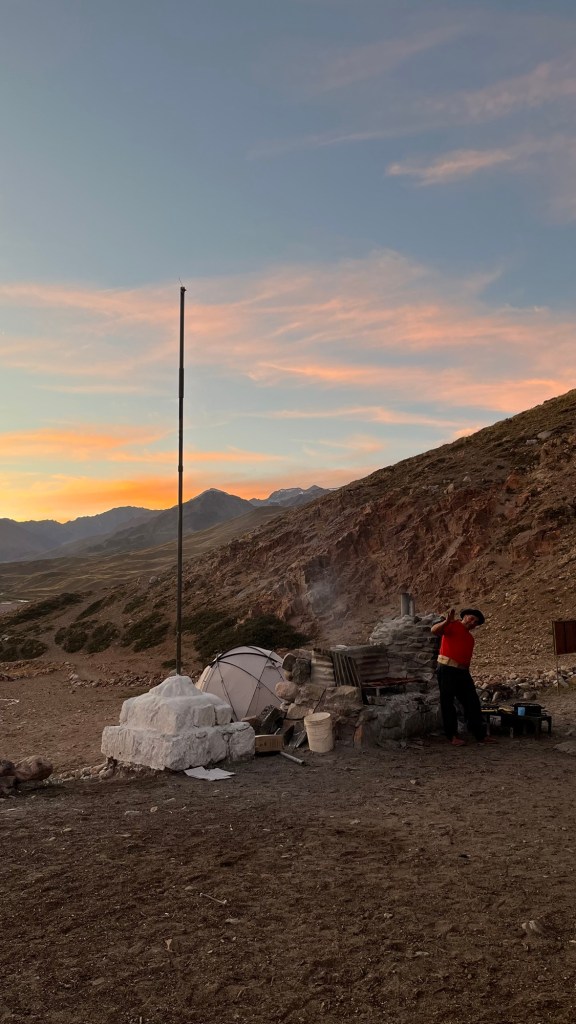
We rode into camp at dusk, and I could feel a headache settling in, though it was unclear if it was from the altitude or the long day. The gauchos helped us set up camp; the women got our own tent, where we laid out our saddle pads to sleep on top of, using the saddles as a pillow. Dinner was served in the main tent, beef stew and potatoes, and I ate quickly and set about getting ready for bed. Despite not having done that much, it felt like a long day.
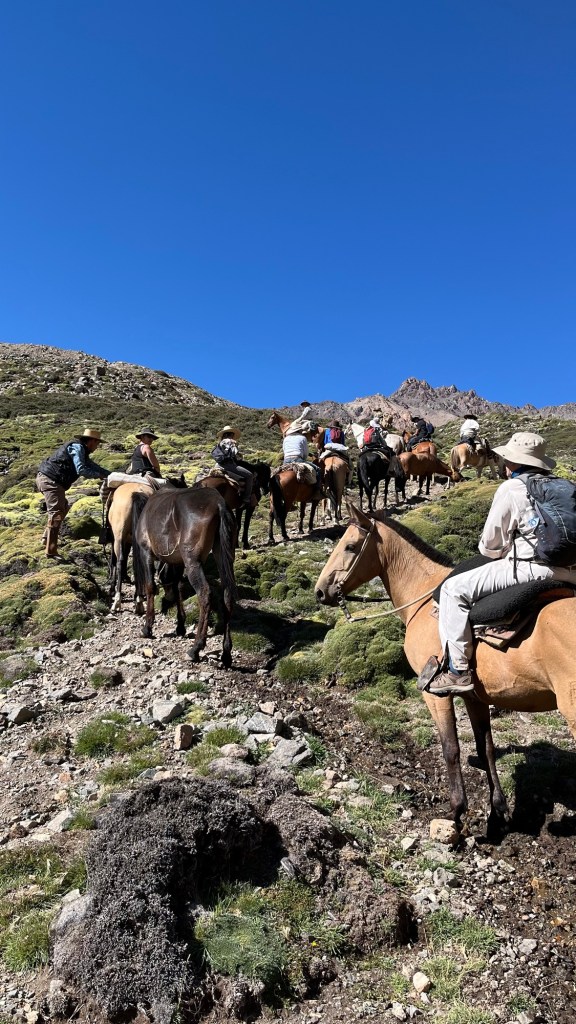
In reality, I had no idea what a “long day” was — not yet. The following day we set off around 9am and set off for the Portillo Argentino, a pass at 4500m (we slept at around 3200m) that was our access point for the depths of the Andes. Struggling once again with Nuve, I set off. The horse only had one speed, I found: a slow plod. Any attempts to coax him to speed up, or god forbid to trot, were futile. Diego and his second-in-command, a rotund ex-military man nicknamed Mocho, encouraged us to hit the horses with the reins to keep up the space. In addition to the fact that I don’t like hitting horses, I found this tactic was useless and served only as a way to express my frustration. So, I decided to accept my fate and allow us to slowly wind our way up the mountains. At the pass, a small notch high up along a ridge line, Diego called all the women forward and shouted some important-seeming instructions in Spanish. I begged Belu to translate, and she paraphrased: “It might look steep but it actually isn’t…just hold on tight, lean back, and keep the horse moving!”
It was, in fact, steep. Very steep. And very rocky. I was suddenly grateful for Nuve’s insistence on carefully choosing his footing, as we very slowly twisted around short, steep switchbacks, clinging to our saddles for dear life. The gauchos rode between us, whooping and whistling to keep spirits high and horses moving. After an eternity, we were past the worst part and continuing along a rocky path littered with the bones of mules and guanacos. The sun was relentless, with no clouds anywhere in the deep blue sky, and no shade to speak of. In the mid afternoon we stopped by a stream to give the horses water, and I tentatively asked Mocho how much further it was till camp. “An hour, hour and a half,” he told me — what a relief. However, this proved to be not exactly accurate. After an hour or so we stopped again by a rushing river for a break. Sweating and burning in the sun, Belu and I ran to the river, tore off our hats and shirts, and laid on the banks to wash our hair and faces. Meanwhile Diego and the gauchos set up a lunchtime spread: on a big bandana they laid out salami, cheese, and bread; two bottles of wine were placed in the river to cool off while a bottle of whiskey was passed around. We ate like wild animals, polishing off most of the food within a matter of minutes, before passing around cups of chilled Malbec and retreating to the thin strips of shade behind boulders to nap. Refreshed after food and sleep, we were back in the saddle and promised once again “an hour, hour and a half” to camp. Once again it was false, and in the strong afternoon sun I was struggling to keep all of my skin covered: hat and gloves on, bandana pulled over my face to block both sun and dirt. As we made our way across a wide, rushing river, a singular cloud arrived and began to pelt us with fat drops of rain. I laughed, tried to get Nuve to hurry back into the sun, and failed. We stopped for one more break and were informed that now it was an hour and a half to camp — which had all of us grumbling. A female condor swooped overhead in great circles, and we finally crested a hill to a view of the Real de le Cruz military Refugio, where we’d be sleeping tonight. The last 20 minutes down to the Refugio were the dustiest I’d experienced so far as the wind picked up, and my eyes and throat burned as small pebbles pelted my face.
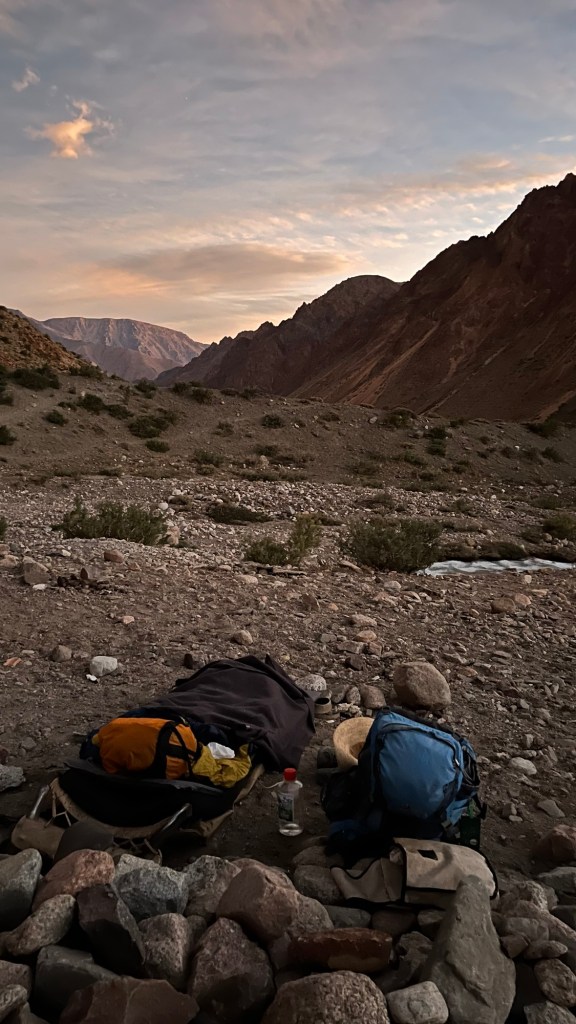
It was almost sunset when we arrived, so I set about preparing my campsite. I decided not to sleep inside the Refugio — I could only imagine the echos of the snoring men — so instead set up outside, facing a vista of mountains beyond mountains. Not too far away, Regina and Juan had set up their own camp. We agreed that sleeping under the stars was preferable, when it was an option, and headed inside for tea and mate until dinner time. After dinner I crawled into my sleeping bag, put in headphones, and listened to music as I watched the stars emerge. The moon was brilliant and full, making it hard to see too many constellations, illuminating the mountains and valleys beyond. However, I managed to pick out Orion’s Belt — the constellation I always use to ground myself and remind me of home. With no clouds in sight to threaten rain, it was a perfect night for cowboy camping, with the cool air of the high Andes on my face, the rest of me warm in my trusty sleeping bag. I fell asleep content.
The next day was a rest day and a chance to acclimatize. I spent most of the day lounging — sitting by the river reading a book with Belu; learning card tricks from Tucu, one of the gauchos; doing a cold plunge in the brain-freeze-inducing river with Santi. I was beginning to understand both a bit more about the rhythm of the trip as well as about Argentinian culture. Ariel had explained to me on the bus how Argentinians are warm and welcoming — but many cultures say that. So, I was shocked by just how much the spirit of sharing infused all of our interactions. Every morning before getting in the saddles, and every evening once we arrived at camp, a few people would brew mate and pass the cups around. Everyone — all the guests and the gauchos — would pass the same cup around, even sharing the same straw. All food was offered around, and everyone was quick to offer help for any issue faced. Even for me, who struggled to communicate well in Spanish, I felt like I already had been folded into the group and had people looking out for me.
Another typical part of the experience, it seemed, was that the gauchos shamelessly flirted with all the female clients — whether they been in their 20s or 70s. I think cultural immersion is very important when traveling, so naturally had to oblige in this time-honored tradition. Working on our trip were 7 gauchos of varying ages: Baci (16), Alonso (18), Tomi (20), Tucu (24), Naranjo (mid 30s) and Diego and Lucas (mid 40s). Some of them would ride with us between camps, while the others would ride with the mules and set up camp. They were very interested in my Spanish education (mostly for curse words), and so Lucas would only respond to me if I referred to him as “mi amor.” The others also tried to organize a cowboy marriage between myself and Tomi, with a ring fashioned out of scrap metal, which I watched in bemusement before ultimately informing them that he was a bit young for me, lo siento.
Oh, and I’m absolutely obsessed with gaucho fashion. It’s functional but still has flair — the vests, the woven belts to tuck their knives into, the pleated pants tucked into boots, the knotted scarves around the necks… I absolutely will be incorporating this into my own clothing going forward.
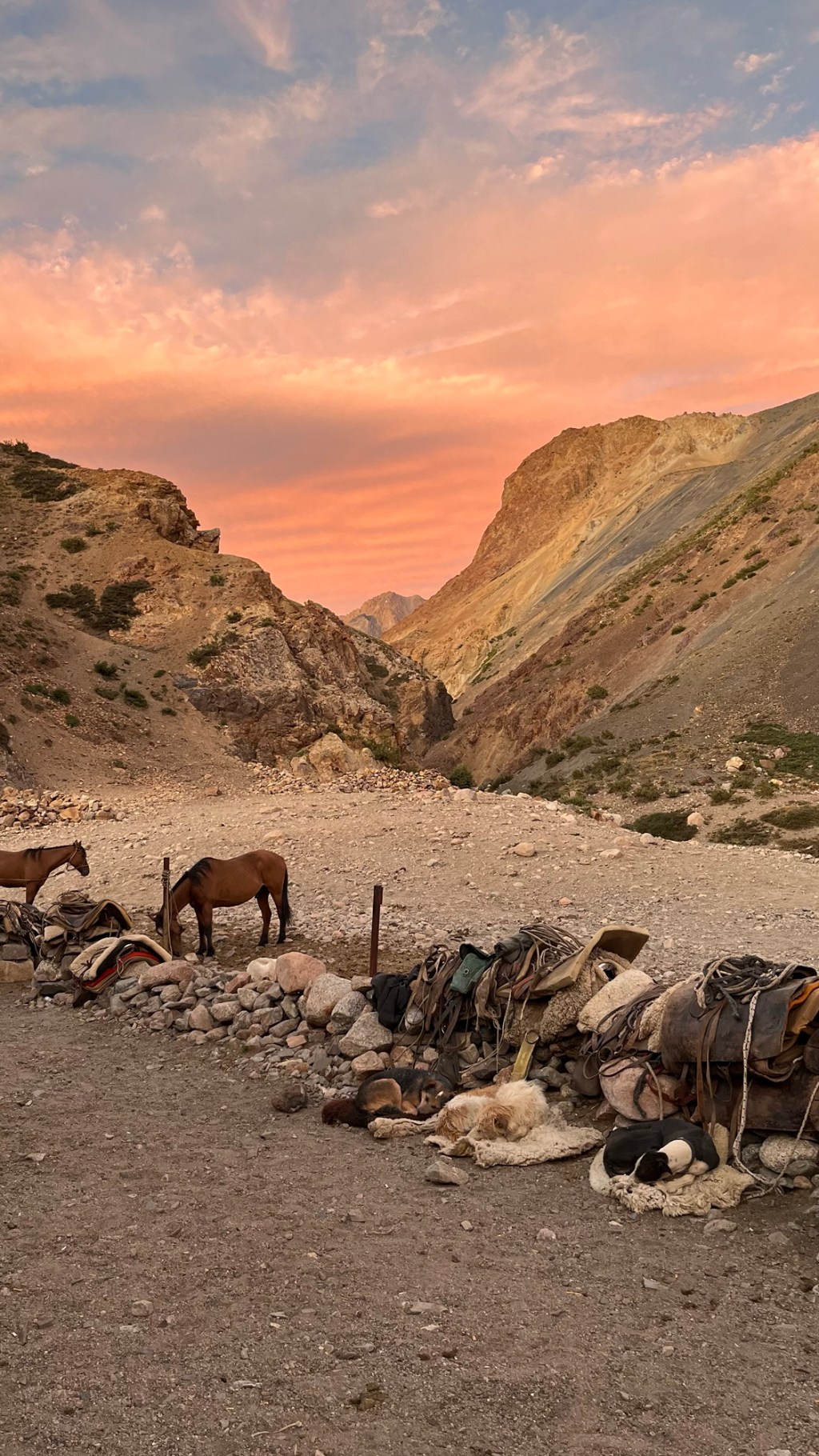
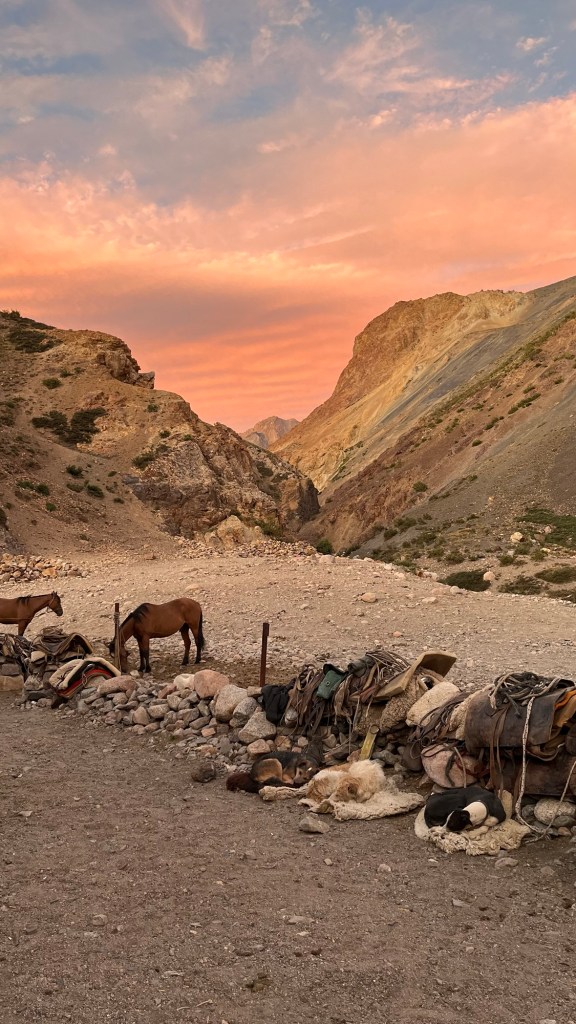
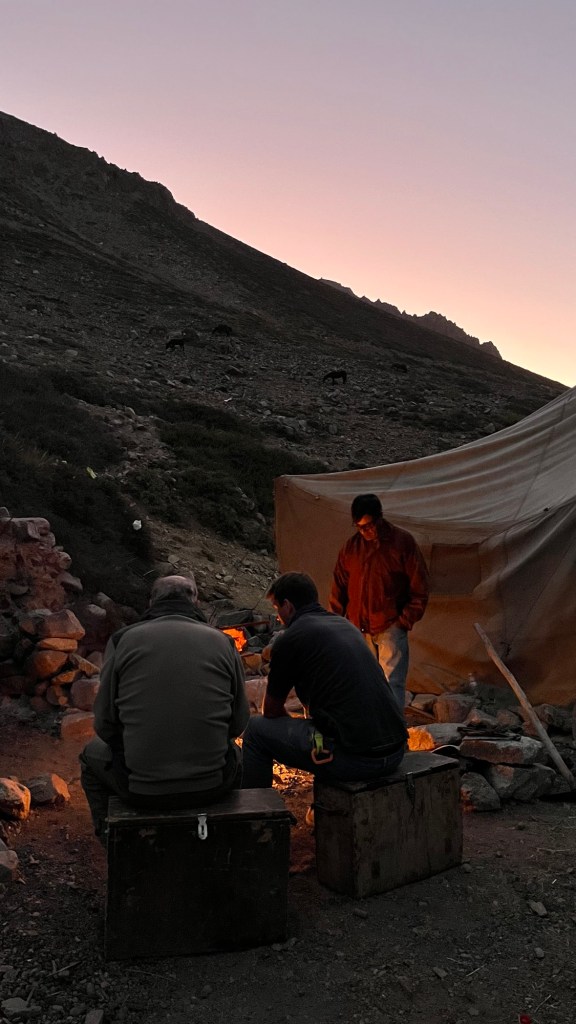
Anyway, after a day of rest and a much deserved shower, we settled in for an asado — my first in Argentina and an important moment for me. Mocho manned the grill with Lucas, mi amor, and we passed around bottles of wine while Baci and Tucu brought out heaping plates of chorizo, mochillo (black sausage), and multiple cuts of beef. Argentinians tend to prefer their beef well-done (which makes sense in this context where we have no fridge and the meat’s been hanging outside…) so it’s a very different experience than having steak in, say, France. And it was delicious — I spooned out multiple servings of tomatoes and onions, mashed potatoes, and offered to help Mariella with her chorizo that she didn’t want. After dinner, Diego opened bottles of sparkling wine, and we celebrated another night under a blanket of stars, sleeping at high altitude in los Andes. The sunset that night was fantastic — the sky painted a million shades of pink, making the mountains seem to glow with stripes of red, orange, yellow, and green. Three dogs curled up to nap on saddle pads while the horses grazed nonchalantly. It could have been a painting. But by the time dinner was done it was night, and lit once again in brilliant moonlight, I tucked myself into my sleeping bag and fell asleep with the cool mountain air on my face.
The next day was the day we went to the Chilean border, and there was the typical hustle and bustle in the morning of getting the horses ready, putting on the multiple layers of pads and the saddle, and grabbing last minute necessities from our bags before they were strapped to the mules. We were warned this would be a long day — 7 or 8 hours on horseback — but I had underestimated just what that would entail. We waved goodbye to the refugio while Mocho grabbed a massive blue-and-white flag, which he attached to his saddle. My Spanish was improving, so when he cleared his throat for a speech I listened as he explained it was the flag of the Army of the Andes, which had never fallen into the hands of the enemy. And today we would bring it to the border to honor General San Martin and his army, who traversed this route on their path to the liberation of Argentina (and Chile, and Peru). I could hear him getting emotional even as he spoke. With a whoop and a cheer from the gauchos, we set off towards the border with Chile.
It was a long day that started with a wide river crossing, then hours meandering across flat, scrubby fields with views to impressive snowy mountains. This landscape eventually transformed to massive red rocks and mesas bay looked like they could be Colorado or Arizona. After about four hours of riding, we stopped for Diego to pick flowers for the women. I stuck mine in my pocket and quietly asked Santi when he thought lunch would be. He told me he had no idea, but hoped soon. In vain, we learned. We stopped again at a windy, rocky, section. Rather than pull food from his saddle bag, Diego pulled out a bottle of Legui, a sugar cane liquor. It was passed around to all of us — normally, I don’t drink liquor but in my desperation I took a swig. It was sweet and yet burned my throat, and temporarily curbed my hunger. I felt like a real cowboy.
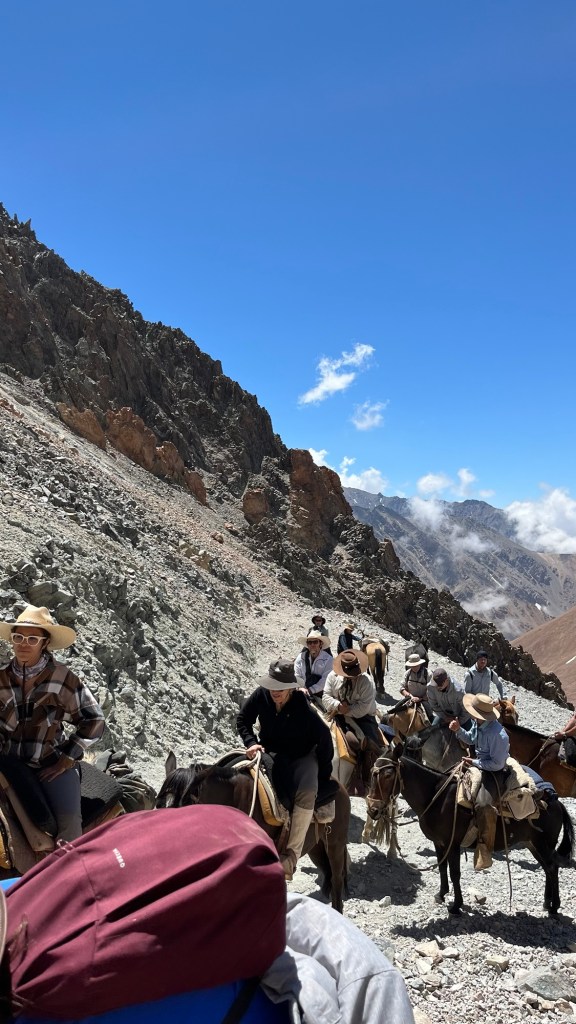
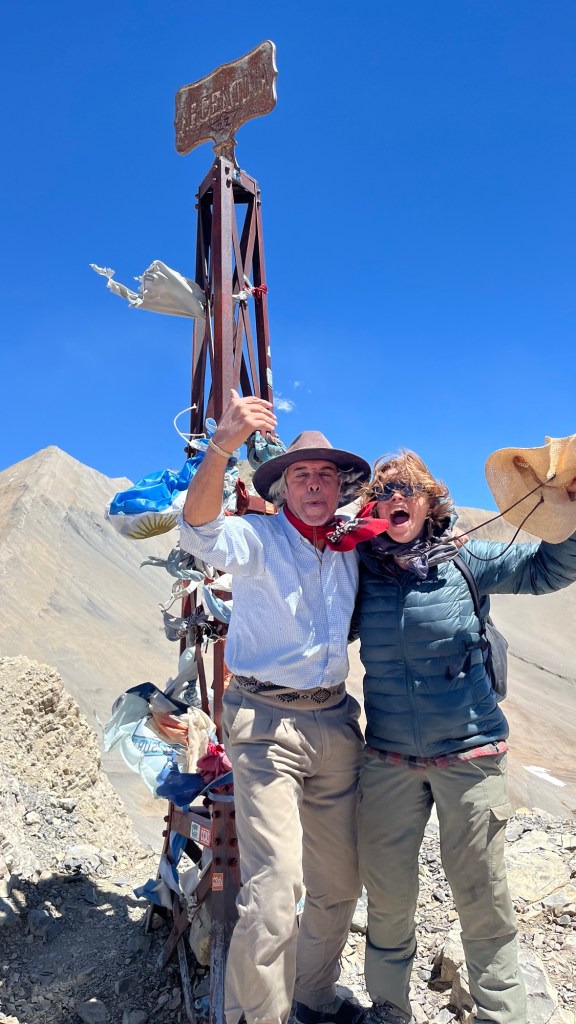
Then it was up again, past a stream and surrounding grass, shockingly green against the rocky landscapes. The higher we climbed, the more the landscape changed, and soon it was more lunar landscapes and slate-covered, rocky trails. The mountains surrounding looked like they had been painted by watercolor, streaked in burnt ambers and ochres. Beyond them, snow clung stubbornly to the peaks of the highest mountains. “Quando es la comida?” I whined to Tucu. 30 minutes, he promised me, but I knew better by now than to believe any time estimate I was given. To bolster my strength, Lucas, mi amor, trotted over and offered a carton of wine that I graciously accepted. And then, finally, we reached the border with Chile: another precarious pass clinging to a ridge. The wind raged, almost knocking me over as soon as I dismounted. Mocho gathered us for a moment of silence to honor the dead from San Martin’s army, and then explained with a cracking voice and teary eyes how this land had been reclaimed from Chile. Many of the men were crying now, and with shouts of “Viva la patria!” the group made its way to the border marker. Whisky was passed around, photos and videos were taken, and we sat clutching our hats against the wind, sucking in the thin air — we were now above 5000m. I was surprised by how patriotic of an event this had turned out to be, and was moved by the genuine joy with which the others hugged me and welcomed me to Argentina. With a few more whoops, “viva la patria”s, and a few curse words directed at Chile from Ariel, we were back in our saddles and headed downhill to — finally — have lunch around 4pm. The bandana was laid out, the leftover meat from last nights asado offered alongside plates of onion and tomato, and we pounced on the food like the starving animals we were. Glasses of wine were passed around, and within thirty minutes most of the group was asleep in the sun, unbothered by the rocky ground. Santi and I chatted for a bit longer about his life and his family before I finally excused myself, found a rock to lean on, and promptly fell asleep.
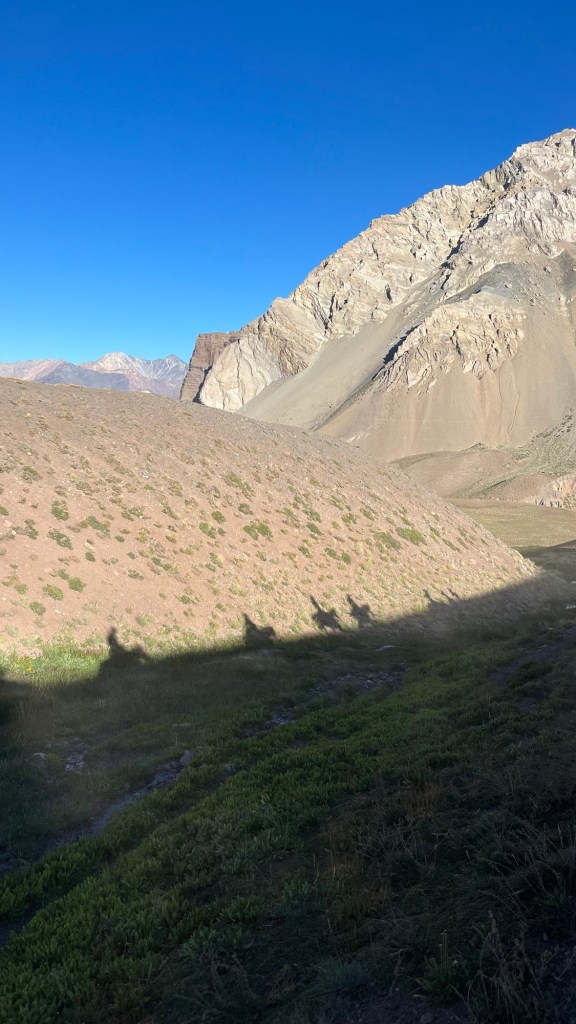
The ride back to camp was longer than any of us expected. The gauchos pushed us on by chanting “yegua, yeeeeegua, yegua ye — wahoo!!” and whistling. I sang Glen Campbell and Patsy Cline to distract myself from the heat and exhaustion. Still just “one hour, hour and a half” from camp, the sun set behind us, painting the mountains in front of us a brilliant orange. As dusk fell we reached flat trails again, and Nuve inexplicably decided to cooperate (probably realizing this would end his day faster). Finally, he agreed to launch into a consistent trot — and whooping, I “raced” Flavio, Facundo, and Santi, laughing as I urged Nuve onward, trying to get him to a sneaky canter. That ultimately was too big an ask. The sun was gone, and the moon had not yet crested the mountains. I squinted in the dim light of dusk as we finally approached camp by starlight. By the time we were off the horses it was completely dark, and I set up camp with Santi by moonlight while the gauchos lit a fire and Juan sang Mexican cowboy songs.
The next day started as the others had, with toast grilled on the fire and jam or dulce de leche. Aware that it was our last full day of riding, everyone seemed to be doing their best to make the most of things. Mocho came by as I was adjusting my saddlebags and urged me to take off my bandana, which I had over my nose to protect from dust and sun. “This is the good air of los Andes,” he explained patriotically, “you have to appreciate it now since you’ll miss it in the city,” or at least, something like that —- my Spanish was still improving. We set off and soon had to cross a raging river, with Diego shouting at us to look at him, not the water, and hold the reins high. Cold muddy water flooded my boots as Nuve picked his way across the rushing rapids and then slowly clopped his way uphill. Soon I had fallen to the back of the pack, and tried to speed Nuve up again to no avail. Finally, Tucu decided I needed to switch, and at the next break we took off my saddle — bye, Nuve, good riddance — and I spent the rest of the afternoon riding Castano. He was a beautiful chestnut color and he actually listened to me. He was perfect. Content, I trotted along, actually finally getting to practice my form, singing more country western songs to prevent myself from zoning out entirely. We crossed the pass again — less intimidating in this direction, I will say, and made the long slog back to our initial camp. By the time we arrived the shadows had stretched long and bathed the mountains in golden light. The horses suddenly picked up speed, knowing they were almost done, and we arrived back at a surprisingly quick clip. I set up camp and one of the men quickly found me and steered me towards the main tent. “Eva, since you had your first Argentine asado a few days ago it’s important you see this. This is Sergio.” Sergio was a curly haired grillmaster tending to a massive rack of beef ribs on a traditional iron cruz grill that looks a bit like a crucifix. Hypnotized and hypothermic in the evening mountain air, I warmed myself by the fire and watched as Sergio tended to the flames, adding logs and herbs with a practiced hand.
We were herded into the tent and plied with glasses of wine and beer, and we each went around giving a toast for the final night. Most of them were quite emotional, and again I watched a number of people tear up when Ariel presented Mocho with a patch of the Argentinian flag to add to his jacket. I decided it was time to join in the action, and gave a brief speech: “This is very difficult for me because I don’t speak Spanish. But this has been a very special and unique experience for me. Thank you to Diego, Mocho, the gauchos, and all of you, my new friends.” I stumbled through it and got a roar of approval when I finished, with more clinking glasses and more singing. Finally the meat came out, and oh my god was it some of the best I’ve ever eaten. I couldn’t believe the combination of meat, salt, and a fire could impart that much flavor. The Argentines insisted on taking photos of me as I polished off my second or third rib, even eating the fat which had gone crunchy and delicious. I hope those photos never see the light of day.
After dinner the party continued, drinking wine with the gauchos and winding our way around the tent in a conga line. One very drunk rider told me he was proud of how I had embraced Argentinian culture, now all I needed was an Argentinian boyfriend. Another offered to play that role — I apologized and informed him I was already married to Tomi, then snuck away to find Belu. She and I peeled off to gossip about the boys. Finally, it was time for my bed — my final night under the Andean stars, and my final night outdoors this trip. It was freezing, but warmed by the wine, my trusty sleeping bag, and a few extra blankets, I eventually managed to doze off.
The final day was bittersweet. We all were looking forward to showers. I was covered in so much dust that it looked like I’d spent a few days in a tanning bed. My hair was knotted and matted to a point I was fearing I may need to chop it off, or keep it in its braid forever. We hung around the river in the morning, brushing our teeth and filling our water bottles, wandering absently as we waited to set off. Finally, mid-morning, it was time — we were back in the saddle for the last time. Back with Castano, my preferred horse, we made quick time back towards the Gendarmerie. After only an hour or two, a few river crossings, a guanaco sighting, and a handful of big clouds of dust, we arrived back to where we had started the journey. The time had flown by, and yet I couldn’t believe it had only been 6 days. I was weather-worn, stiff in places I had never been stuff before, and — to my surprise — much more comfortable horseback riding than I had been when we’d set off. Somehow it hadn’t occurred to me that I might actually develop some skills from this adventure. And I certainly looked the part now, all of my clothes faded from the dust and sun, my makeshift cowboy hat resting on my back, sporting my grandmother’s flannel shirt and my old bandana I bring when hiking. At the Gendarmerie we dismounted, informed the relevant authorities that we had safely returned to civilization, and started saying our goodbyes to the gauchos are they packed up our saddles. Many hugs and photos later we piled back into the bus to collect our things from Diego’s house. The gauchos were still working, waving farewell and tilling their cowboy hats. I leaned out the window, shouted a final “adios, mi amor!” to Lucas, and then we were off, the red rocks of the Andes in our rear view.
It was a long day to actually get back to Mendoza, and I was dirty, starving, and exhausted when the bus dropped me and my 20kg of luggage at my new hostel. I managed to elbow my way into reception, check in, and beg for a shower, explaining to the receptionist that I didn’t normally look like this. He gave me the up-and-down in my full cowboy garb. “I’m so sorry,” he said, seeming somewhat apologetic, “but I actually do have to take a photo of you first for your file…” Defeated, I smiled for the worst photo of me ever taken.
That night, I met most of the others for a final dinner in town. Over burgers and wine we debriefed the experience, talked about plans for the rest of the summer, and enjoyed a few more laughs. I would see some of them in the coming days, but I said my last goodbyes to Ariel and Santi, Mariella and Sonia, and to Belu’s mother Claudia. Then it was back to the hostel for a well deserved sleep in a bed(!) as I gradually readjusted to civilization. This was the end of my outdoor adventures — the rest of my trip would be more typically relaxing, wine tourism and exploring cities. I wasn’t sure I was ready to say goodbye to the mountains — but so it goes. These are memories I will cherish for a lifetime, truly.














 Eva on the Via Francigena (and beyond)
Leave a comment