Song of the Day: Amor Fati — Washed Out
“Design, you’ve got / The life to guide / Your faith decides / The world’s your goal to find”
Walking high in the hills, feeling like I was the only one on earth, and this song suddenly seemed to come to me. To be honest, I hadn’t expected to use it this trip but….it works in its semi-trippy, spaced-out electronic glory
It was hot and stuffy in the hostel room when I woke up, so after opening the windows for a bit of air I started my morning routine. Genji was already up and moving, and as I was packing up my things and skim my the guidebook pages, he was grabbing his bag to go. Unfortunately, my clothes hadn’t dried overnight, so I ended up strapping both a t shirt and a pair of shorts to the front of my pack, in addition to my socks.
I left the hostel in search of food, cutting across the nearby piazza and down a set of stairs to a place with a sign advertising “coffee and bagels.” Deluded, I thought for a second I might be able to get an American-style breakfast — but no dice. Bagels are only for lunchtime, stupid americana. So, I took a cappuccino and a focaccia to go and headed out in search of an Italian breakfast. I found it across the street at a pasticceria, where I saw the same bikers from yesterday. I ordered some sort of pastry — a crunch, flaky, palmier-like exterior around a ricotta-filled interior that was delicious but a bit too sweet — and continued on.
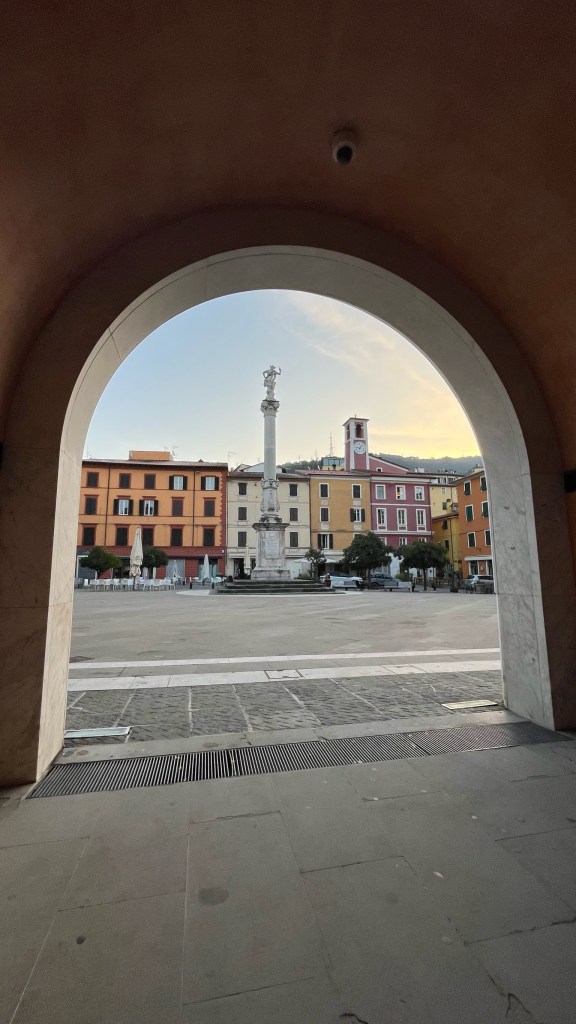
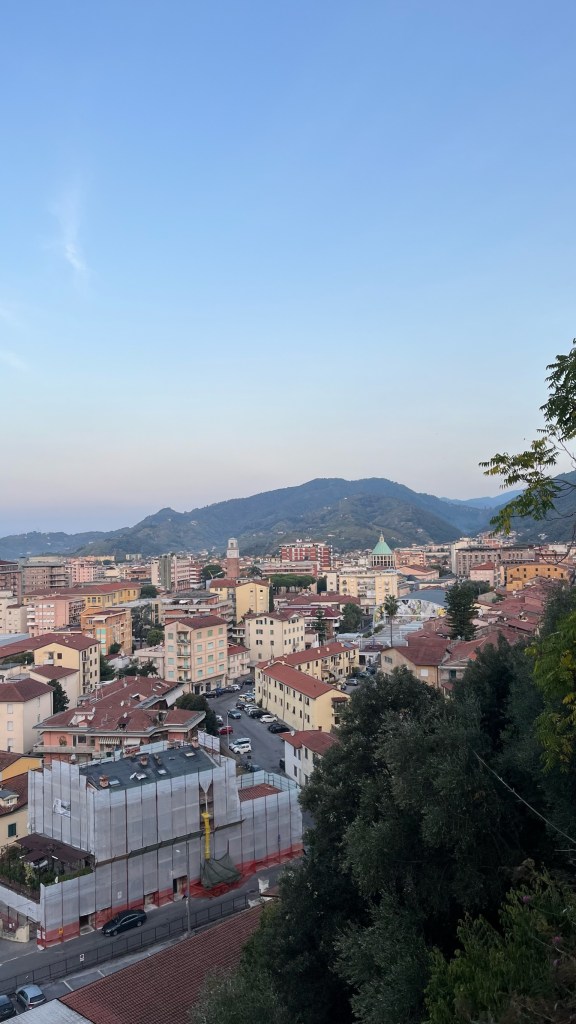
Immediately the path started uphill, which make me regret this sweet treat. I pressed on through charming stone streets, up to the top of the hill where I had a view back over the city. Then it was a quick descent to the main road, which I nervously followed on a narrow (and sometimes non-existent) sidewalk for about an hour, before finally turning off onto a quiet street.
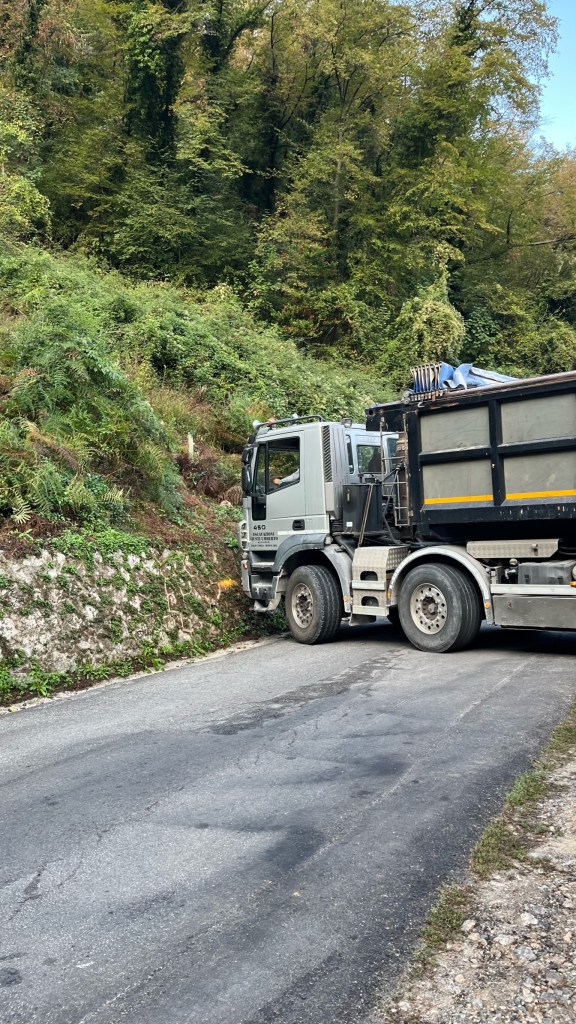
This brought me into Cappane, a quiet but charming town set in a small valley. I crossed over a small stream and started up the road, slowly winding my way uphill toward a castle that stands over the village. There was some roadwork going on that didn’t impact my walk, though I did stop to watch a massive truck execute an Austin Powers-style 3-point turn on the narrow road. Then I continued up, gaining a good amount of elevation in a surprisingly comfortable manner — I just thought of how much easier the Alps and Appenines would have been had I taken the road!
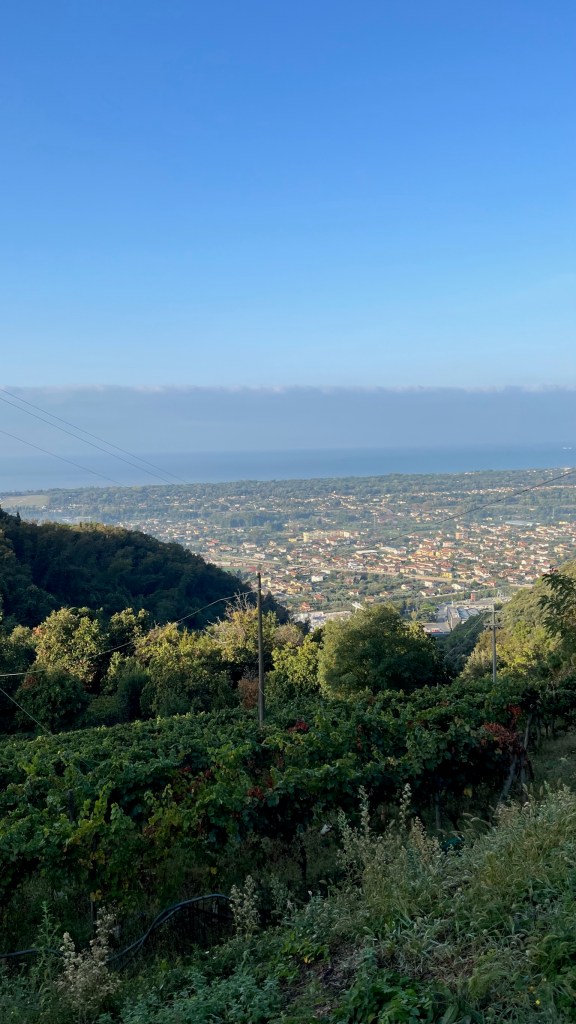
Soon I reached the summit, where the turn-off to the castle was closed. However, I was still treated with broad views out to the sea, where a wall of clouds hung over the water, making it difficult to find the line between sea and sky. The land from the foothills to the water was densely populated — a string of beach-towns that overflow with people during the summer.
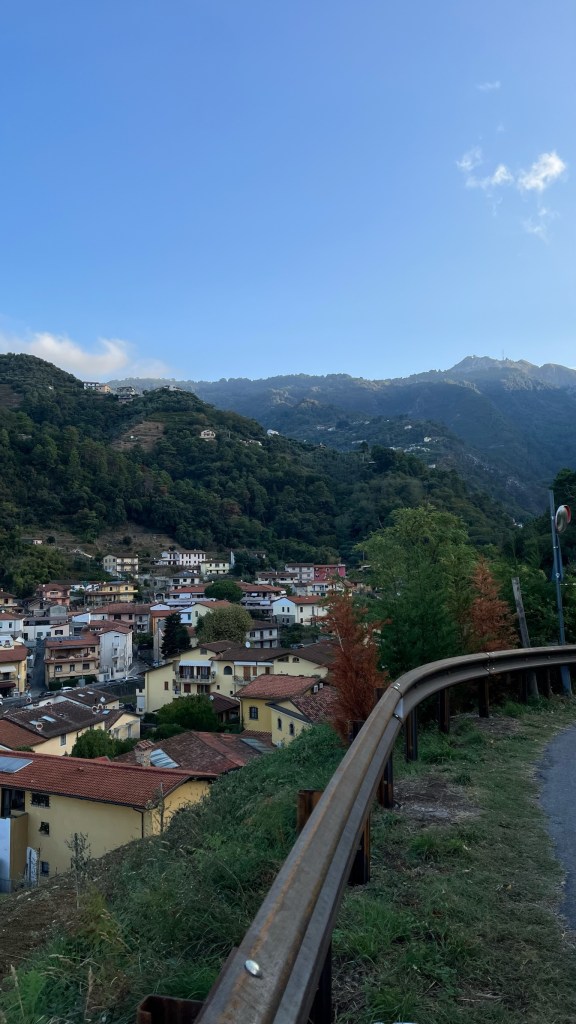
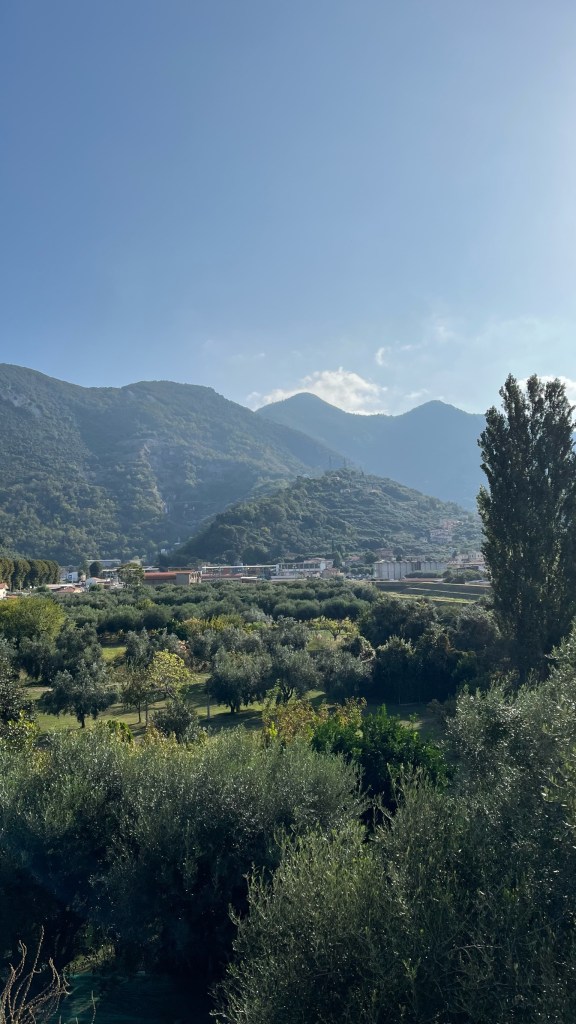
But here, high up, it was surprisingly peaceful. As I continued on this winding road, I was struck by how incredibly lush these hills were. The air was humid but fresh, and I could hear birdsong and almost no traffic at all. It was amazing to be somewhere so tranquil with a view to so much chaos down below. I walked up here for almost 2 hours, enjoying the quiet and running into only a few others: some joggers, a stray dog who payed me no attention at all, and a few delivery vans.
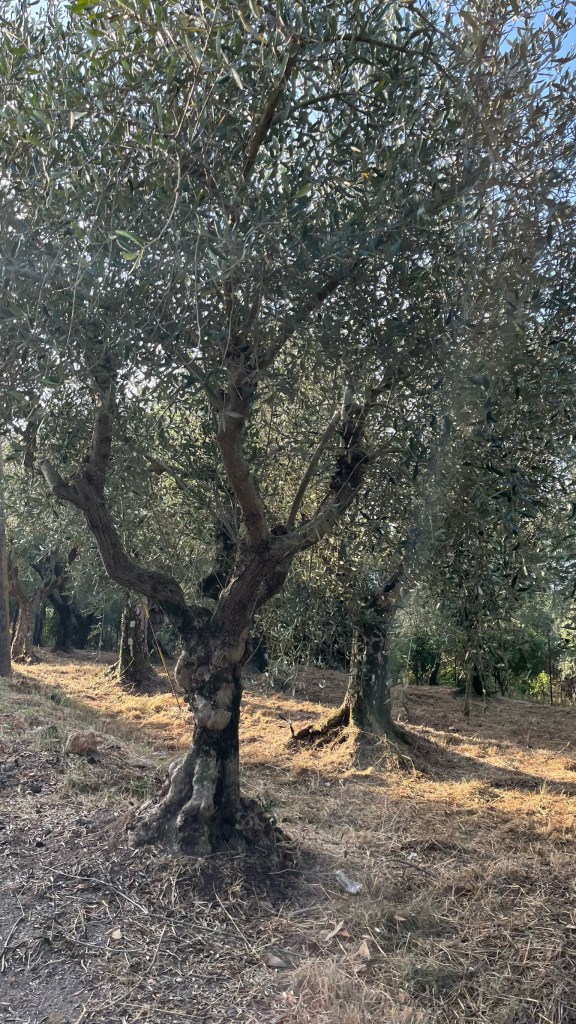
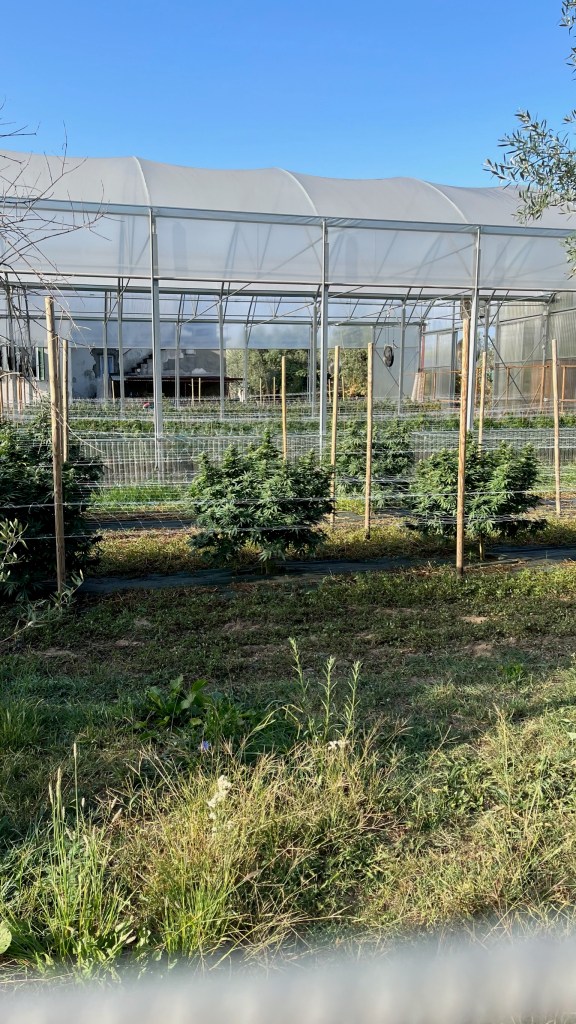
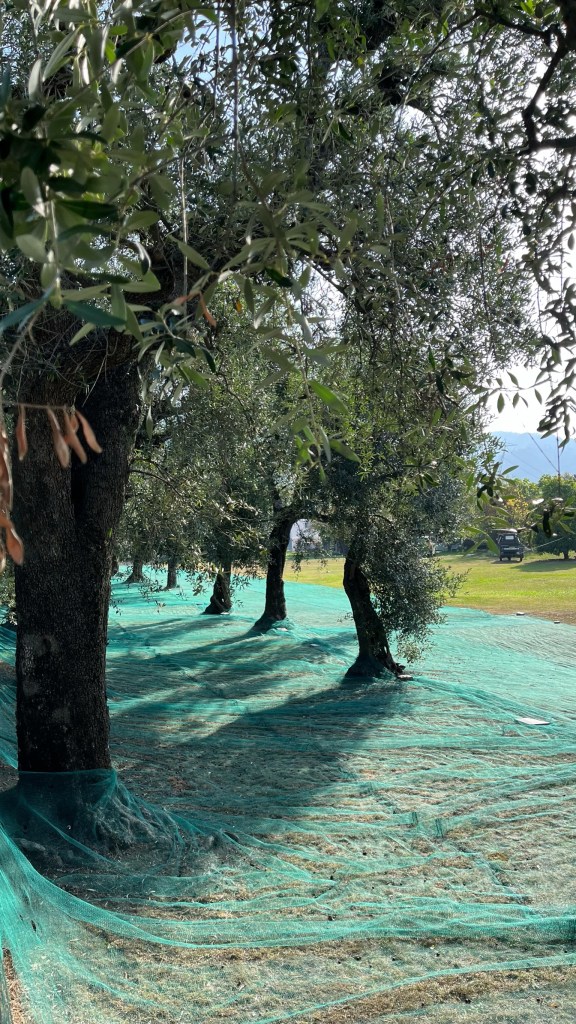
Then it was downhill into the town of Ripa, where I began walking through backyards filled with olive trees, with netting down below them to prepare for the harvest. I love olive trees, and I find it amusing how they are so grotesque. Seriously, look look at their shape, which always seems to be writhing — if trees could talk, I have to imagine olive trees would emit a wretched scream. But it was silent in town as I passed through. At one point, I caught a whiff of something that reminded me of some of the walking in France — could it be? — I looked over and yes, there were bushes of hemp growing next to me in a greenhouse. A sign advertised the first cannabis-focused agriturismo I have seen.
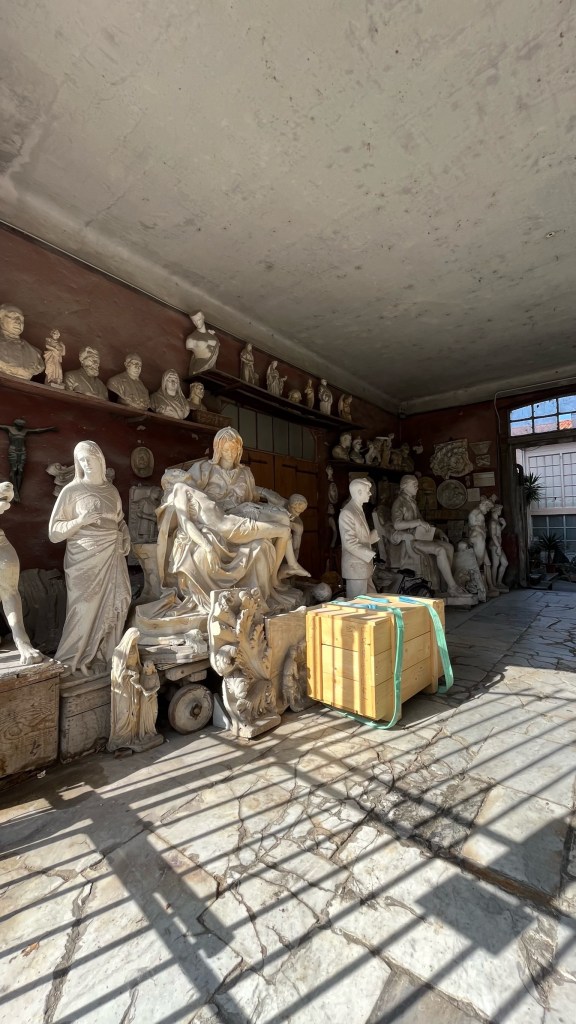
Leaving Ripa I was back into the heart of the marble industry, walking along an embankment over a river, with a few into the factory yards of various marble companies. Diverting off of this trail briefly, I unfortunately misunderstood the VF sign markings and ended up walking for a hazardous 10 minutes on the side of the main road, where I was stuck with no shoulder, jogging around blind turns to minimize the amount of time I wasn’t visible to drivers. As soon as I could I clambered back up to the protected path, which eventually dumped me onto a road and into the outskirts of Pietrasanta. As I walked by more stacks of marble blocks and slabs, I found myself amazed at the concept of marble sculpture. I can’t imagine looking at a chunk of stone and being able to envisage something beautiful — much less the actual craft of chipping away to create it. I thought about Michelangelo’s David, which I saw many years ago in Florence, and suddenly had a better appreciation for just how massive that block of marble had to have been.
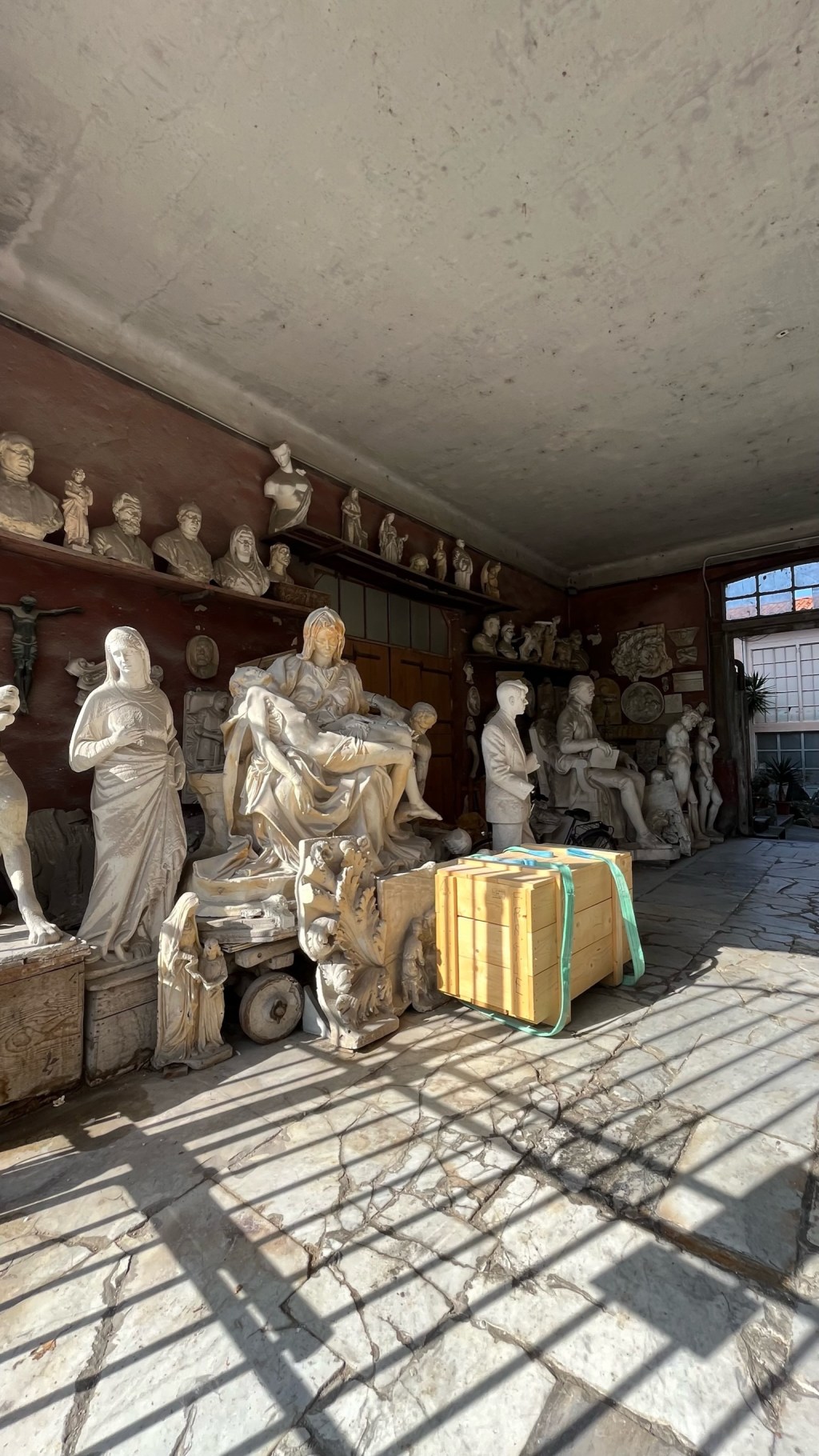
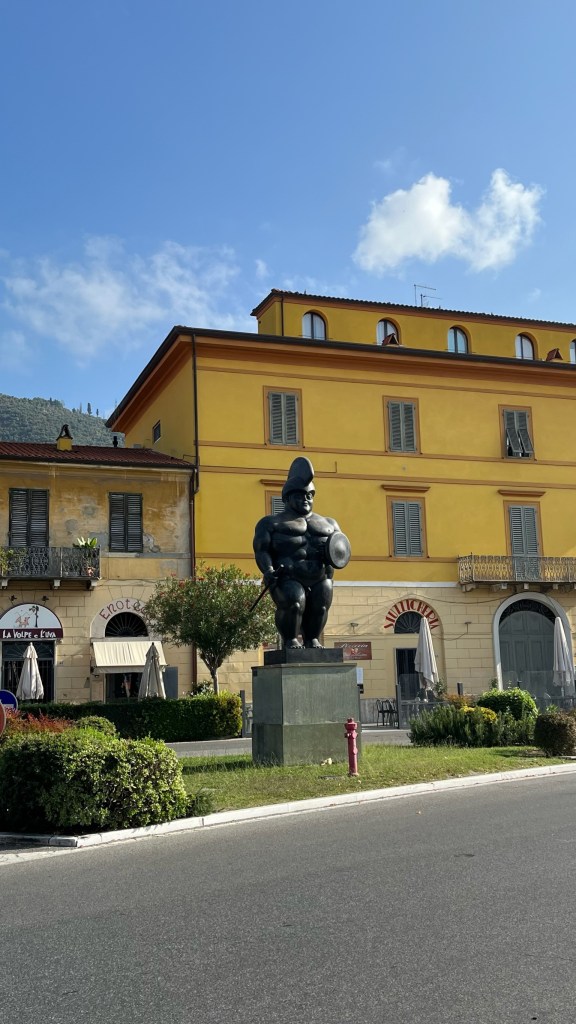
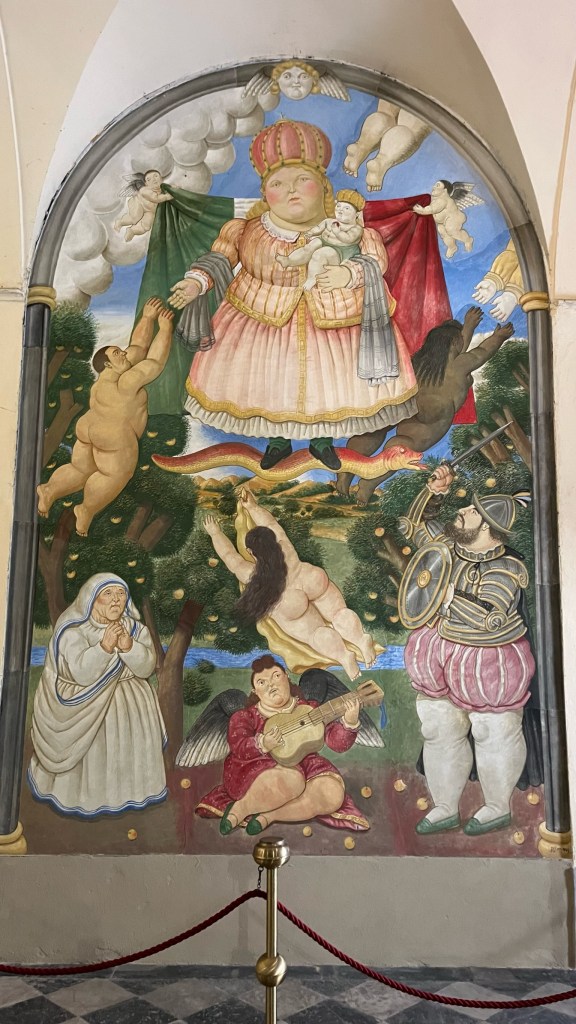
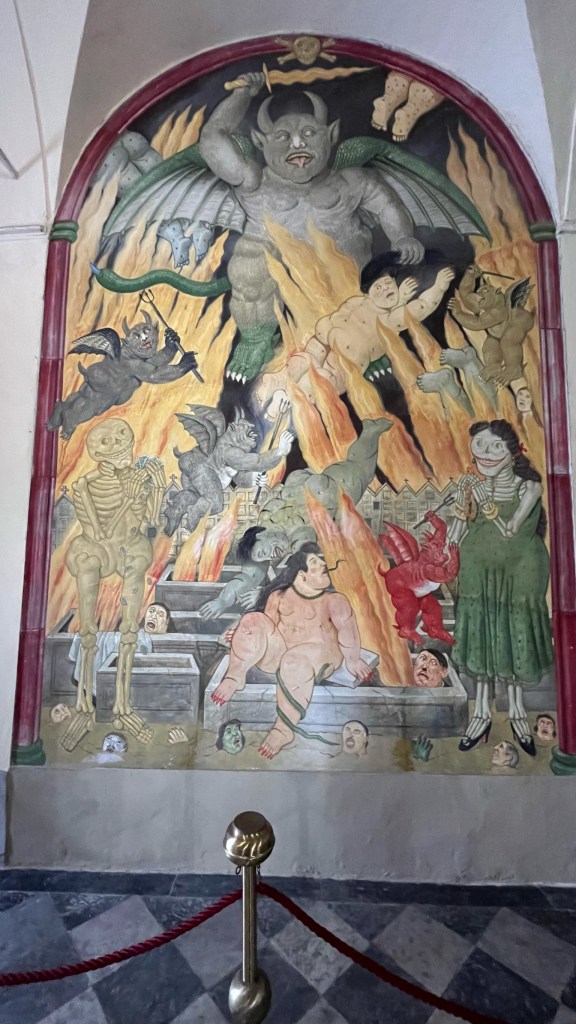
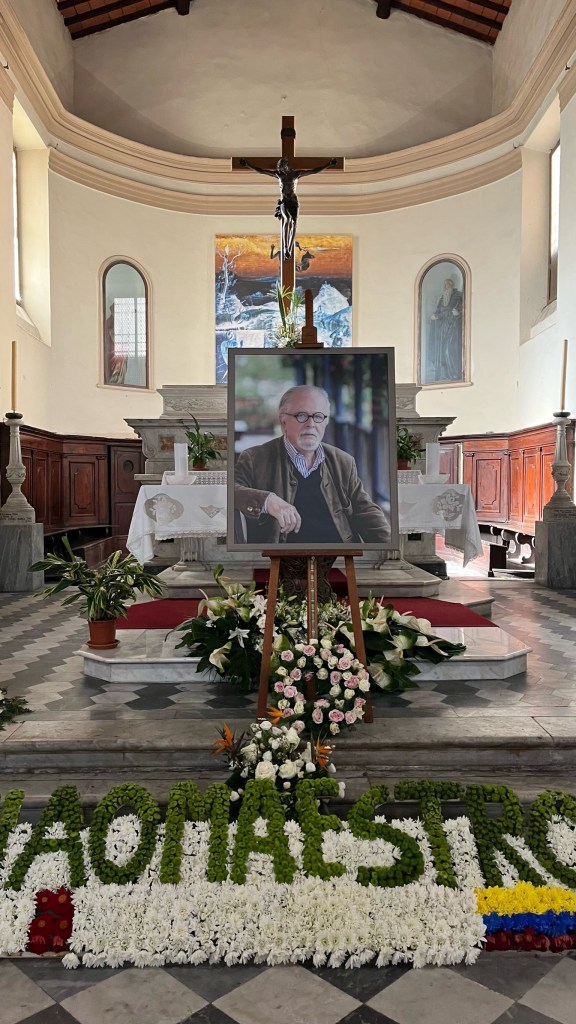
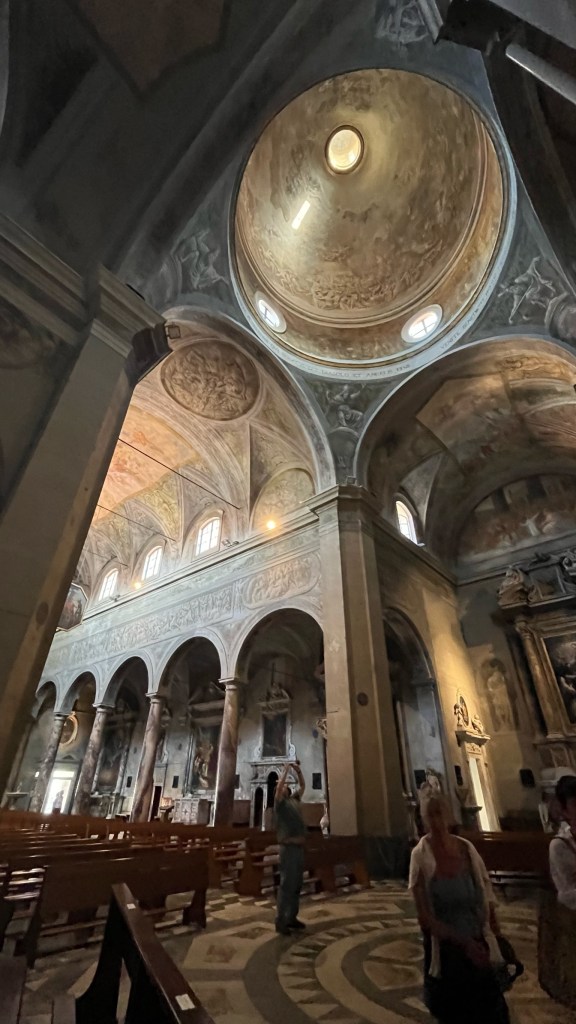
Soon I made my way into the arty city center of Pietrasanta. This is clearly a well-heeled Tuscan town that still has ties to the marble industry, its lifeblood. It also has strong ties with Botero, the Colombian artist who recently passed away: a statue of his welcomes you at a rotunda point near the city entrance. And, ducking into a small church, I stumbled upon two Botero frescos representing heaven and hell, as well as flowers commemorating the artist’s life. I continued on to the marble-clad Duomo, whose inside also uses marble liberally.
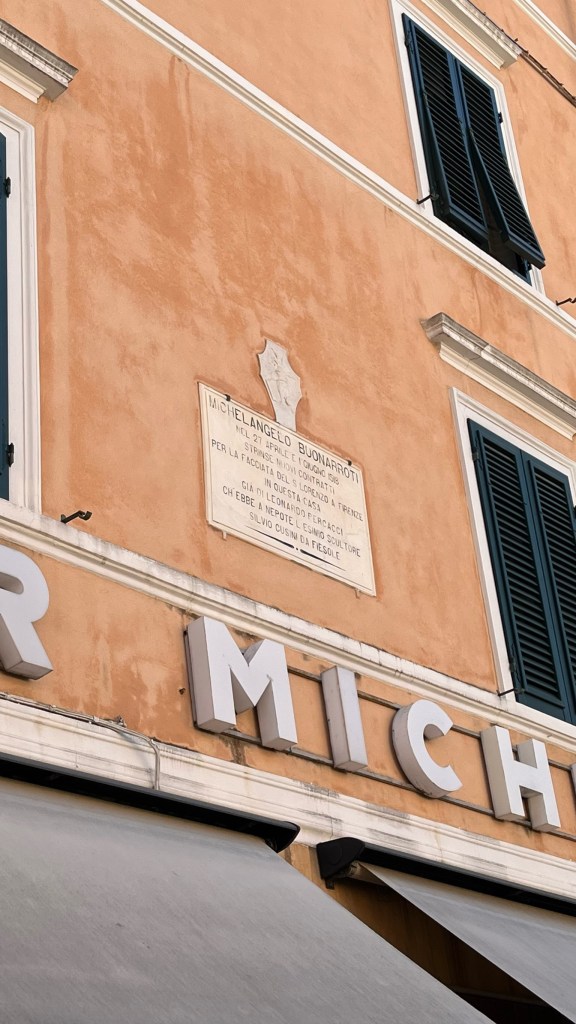
After a quick lap of the church I went to seek out a place to sit in the main piazza — I hadn’t stopped since leaving Massa some 10 miles back. I ended up sitting for a snack at Bar Michelangelo which, I discovered, resides in a former home where the man himself stayed. Michelangelo came to Pietrasanta many times, staying in homes throughout the city as bases for his expeditions to see the Carrara marble being mined from high up in the Apuan Alps. He would come do quality-control himself, hand-selecting the blocks he wanted to bring to life.
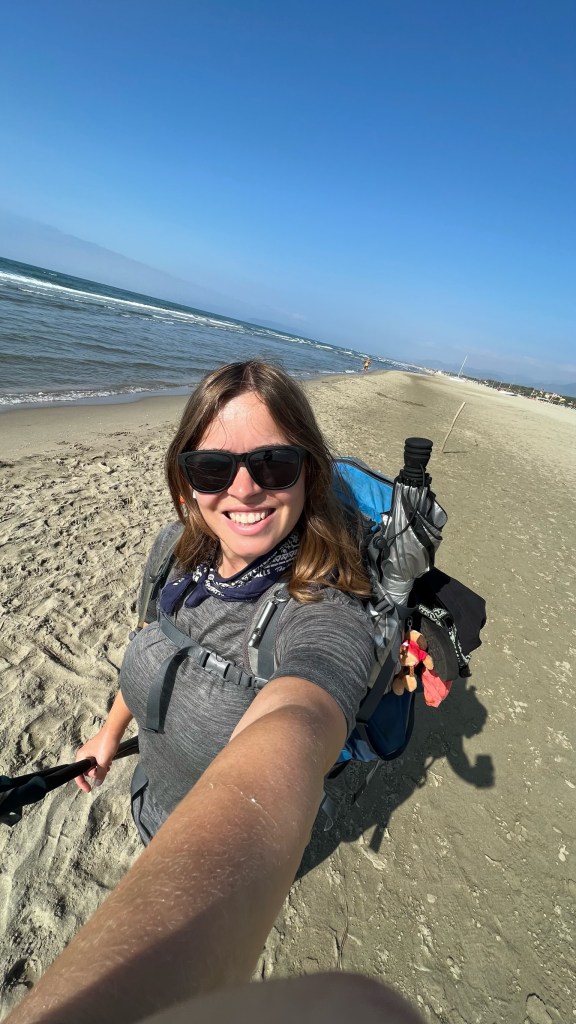
After coffee, I got a stamp from the tourist kiosk at the entrance to town and headed over to the train station, where after some drama I managed to get on a bus that would take me straight down to the Marina di Pietrasanta. It was lunchtime now, and I was looking forward to finding a place to lounge on the beach and have some seafood pasta. As it turns out, this was harder than I expected —- despite the extended summer temperatures, mid-October is very much after the end of season for Italian beach towns. The seafront, usually covered in colorful beach umbrellas belonging to various bagni, was empty. The few bagni that were allegedly open on Google were all closed. So, I cut over to the sand for a bit to walk along the water, before diverting back to the bike path. I made my way in the direction of a trattoria that I hoped would be open, when I passed a restaurant with clientele! Not wanting to risk it with the trattoria, I sat down here instead, even though it was an upscale place — I figured I had earned a nice treat.
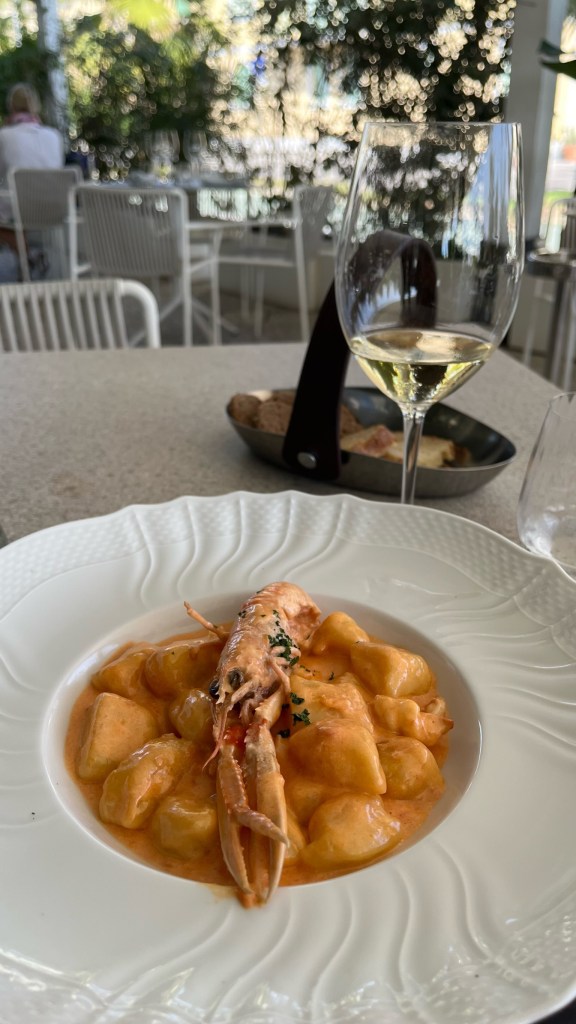
So I sat for awhile, enjoying a glass of Vermentino and my langoustine gnocchi, which was delicious. I polished all this off with a raspberry lamponi and a bit more wine, gifted from the couple at the next table who hadn’t finished their bottle. After paying the bill, I was ready to get back on the road, walking another couple of miles in the hot sun along the bike path. Once I had established myself as properly in the Marina di Camaiore, I cut back to the beach and found a place to sit. I laid out my ground cloth, took out my clothes to dry in the sun, stripped down and ran into the water. Well — up to my waist. This is one of those beaches where the semi-shallow water seems to go on for ages. The water was cool and refreshing, and the wind was strong, so waves splashed against me with some force. I waded for a bit before retreating to my towel to lay in the sun. I remembered sitting in the sun along the beach in Dover, eating my dinner. That was only 2 months or so ago, and yet it feels like another lifetime. So much has happened in the interim.
I chilled out on the beach for about an hour, listening to a podcast and digging into my emergency focaccia I had purchased this morning. When I was done, I slowly packed back up, changed into sandals, and stumbled across the sand back to solid ground, where I bought another bottle of water and caught a bus to Camaiore.
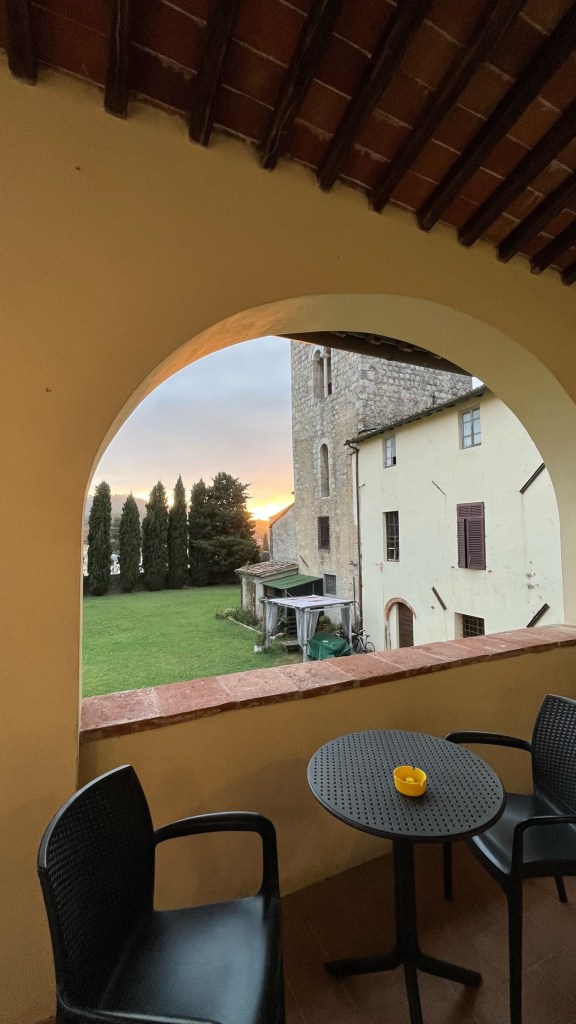
I checked into the pilgrim hostel in Camaiore, a lovely structure that is part of a former convent where Sigeric himself would have stayed. I met my bunk-mate, Marisa, who is about my age and lives in the Netherlands, though she is from Germany. After the normal pilgrim chores, during which I discovered I had left my shampoo (i.e., my all purpose soap) at the last hostel — only the second thing I’ve lost, including a pink scrunchie that fell out of my hair somewhere between Arras and Bapaume.
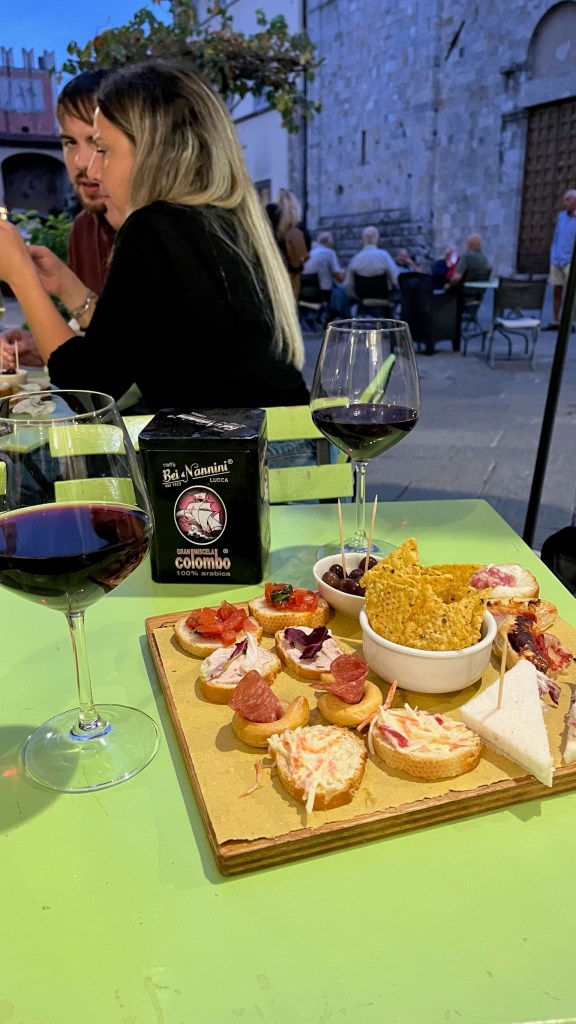
Afterwards, Marisa and I headed into town together to explore — the town was charming, more so than I expected. We walked a lap, and tried to sit down at a winery that allegedly offers a pilgrim discount, only to learn they only are open for food and drinks Friday and Saturday. Instead, we found seats at a bar near the main church in town, where we each had a glass of Montepulciano and aperitivo snacks as dinner. The conversation was very interesting and much deeper than I had expected, as she shared some of her learnings from her previous Camino experiences and I reflected on my time on the Via. It was a very interesting conversation as we have different perspectives on some aspects of pilgrimage — for example, we talked about a man she met who was walking with no phone, map, or money. I said I admired the no phone and map, but that I don’t believe in the expectation that strangers should accommodate you free of charge — after all, if every pilgrim behaved that way, no one would accept pilgrims! Her point was that you need to force yourself to rely on the kindness of strangers to force yourself to accept help. I don’t disagree, with the premise, but still think it is important to live a life that leads by example. Ultimately, we came to a middle ground around a balance of giving and receiving on a journey like this.
Heading back to the hostel we sat for a bit with Genji and Michelle and Peter, a couple from England who previously walked with Kerry and Andy! It was a lovely evening. Off to bed for me!
Final mileage: 13.79 mi
Walking time: 6h 34m (excl. beach and lunch stops)
Elevation gain: 1,689 ft
Accommodation: Ostello del Pellegrino. A recently opened pilgrim hostel in a former monastery that almost certainly hosted Sigeric himself. A good hostel, and would recommend.


Leave a Reply